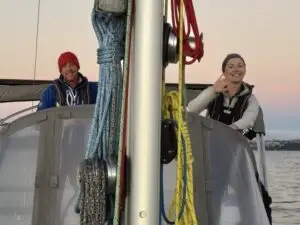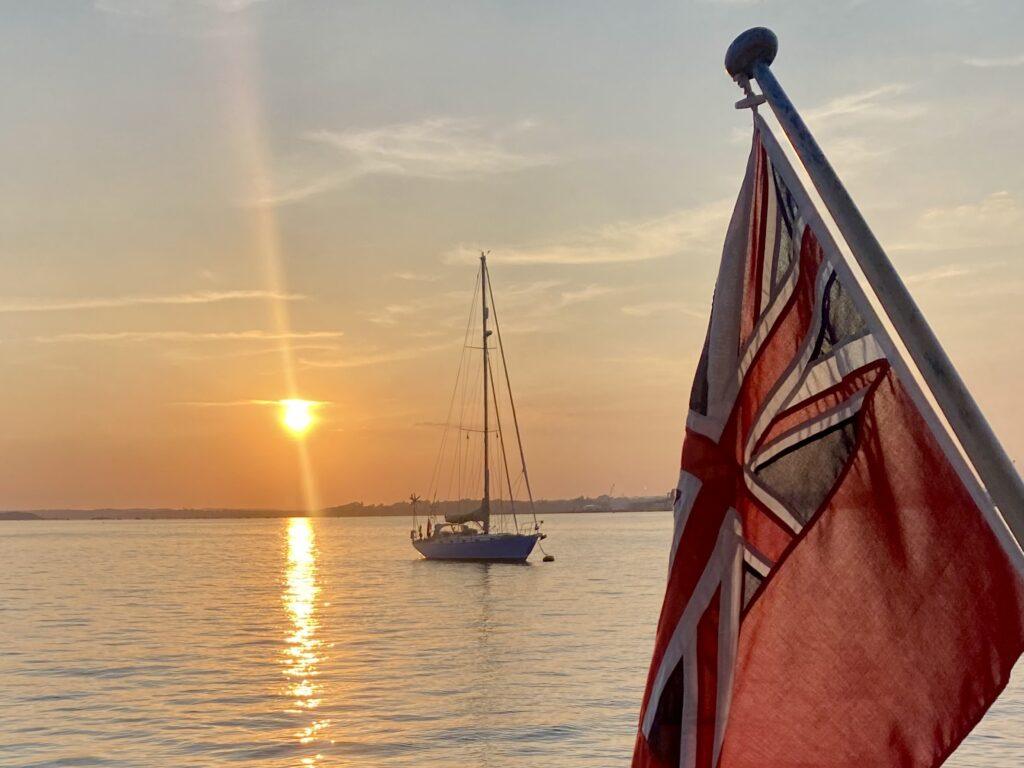
When we were back in Poole we were keen to progress our experience in living ‘on the hook’. This means at anchor, rather than in a marina – as marinas get expensive over time, especially when coming into the peak season.
Previously, in Chichester Harbour (see Cowes to Chichester Harbour), we had come up with a number of ‘attachment’ levels with a mooring buoy being #3 and anchor #4 – it was time to move up the levels!
Mooring in Poole Harbour
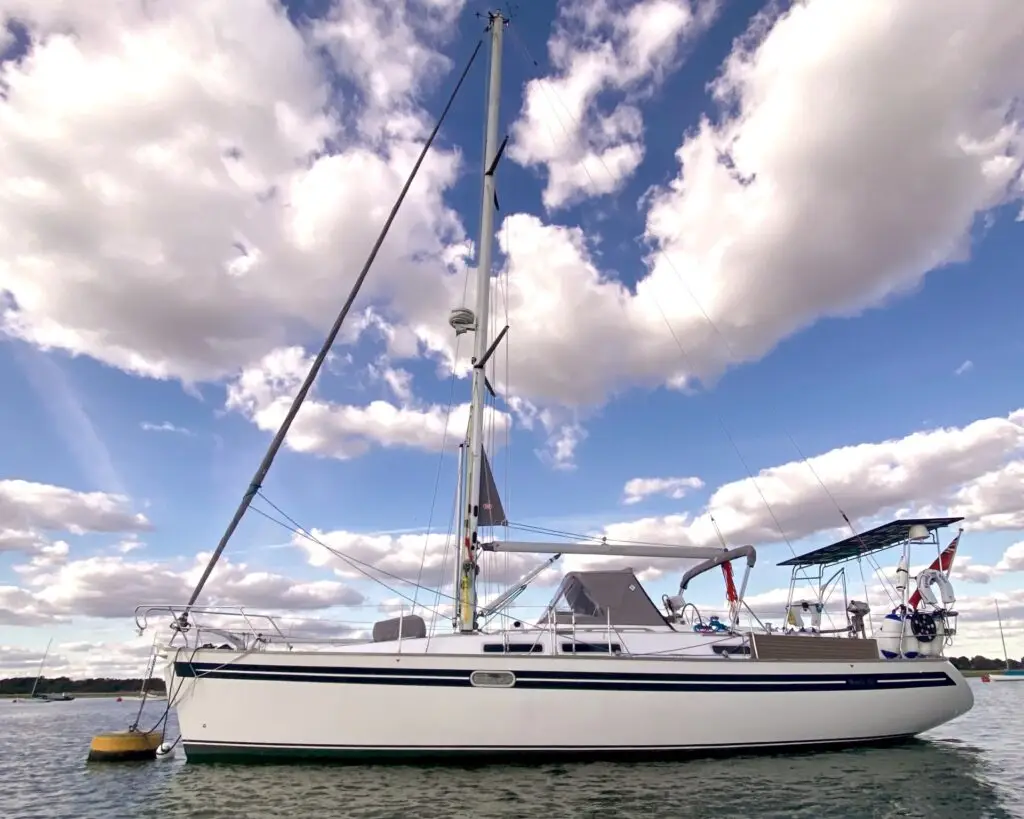
Poole Quay Boat Haven had kindly allocated a mooring buoy for as long as we needed it, which was on the North East side of Brownsea Island – a good dinghy ride into the town quay. The team at Poole do run a water taxi service for people using the buoys, but we kindly declined as needed to get used to deploying our dinghy for transport. The dinghy is also called the ‘extra boat’ (EB) in our world as one of our good friends asked us once what the ‘extra boat’ that most yachts seem to have is for! Think of it as your car, whereas Yanula Blue is our home, so we need a way to get around and do errands.
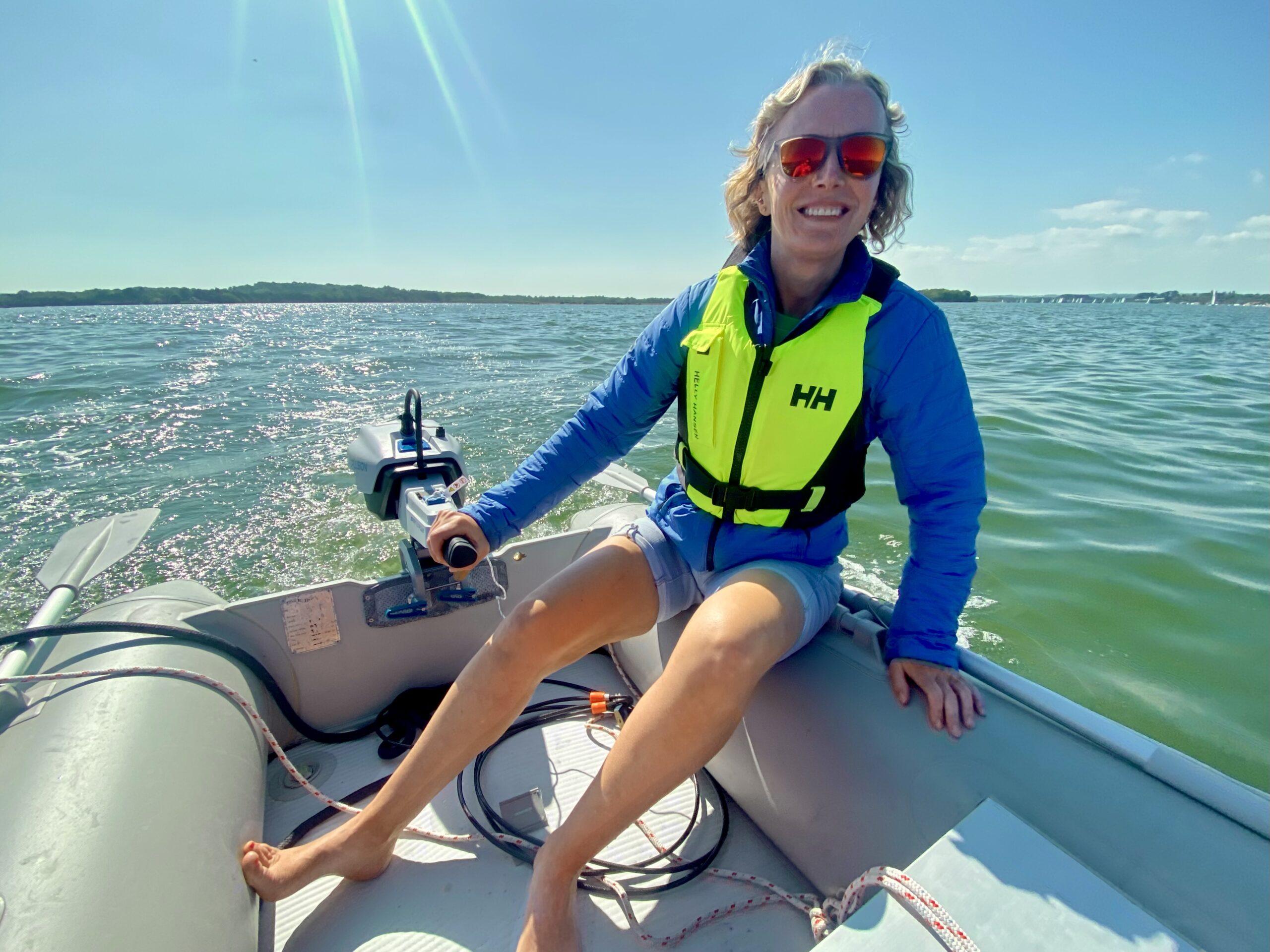
When we were in Chichester Harbour we hadn’t used the EB very much as we realised the outboard wasn’t reliable, so we had simply rowed a short distance to the nearby jetty. This time we also wanted to test the new electric outboard (ePropulsion Spirit 1.0 Plus-S) as we wanted to get a feel for battery life and range.
The new outboard
Our first trip on the EB was just up to Poole Yacht Club to catch up with some friends for a bite to eat.
The outboard went well, although doesn’t quite have the same feel of power as a petrol powered outboard – it just doesn’t give the ROAR!! A bit like an electric car doesn’t have quite the same noise as a good old dinosaur burning engine – yet it is quietly and competently doing its thing. The upside though, is that you can hear what’s going on in the nature around you. The trip was easy, even though we were against the tide, and we were pleased with how it went.
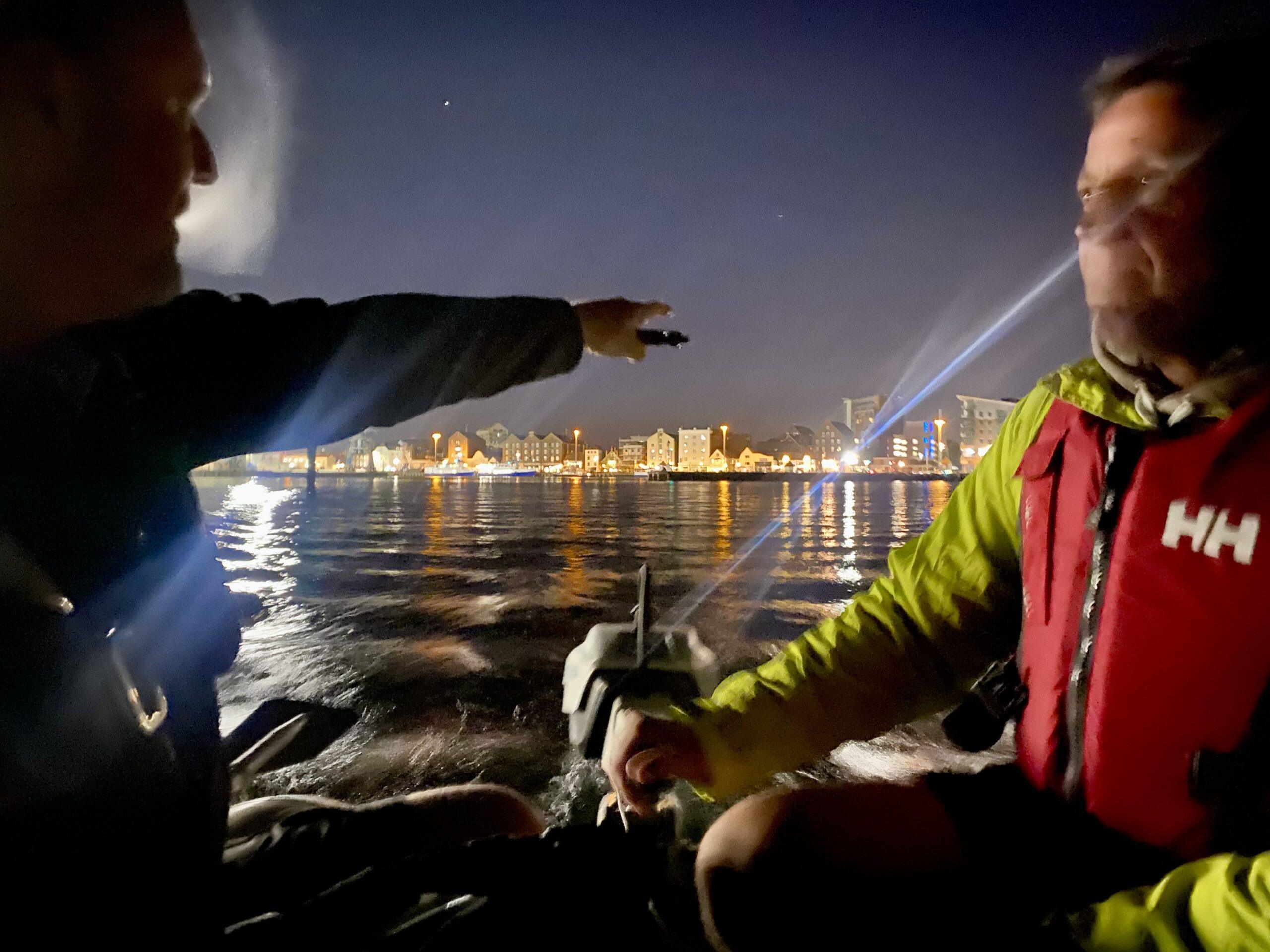
Over the next few days we got used to using the EB to go to Poole, go do some shopping, attend appointments, have lunch with friends etc. One night a friend decided to come and stay onboard and the EB handled the 3 of us with ease in a very funny crossing in the dark. We always wear flotation aids or life jackets on even the shortest trips, as you never know what may happen – one day we crossed back to Yanula Blue in a very choppy sea, and we were drenched! 30 minutes after arriving back it was calm as calm can be.
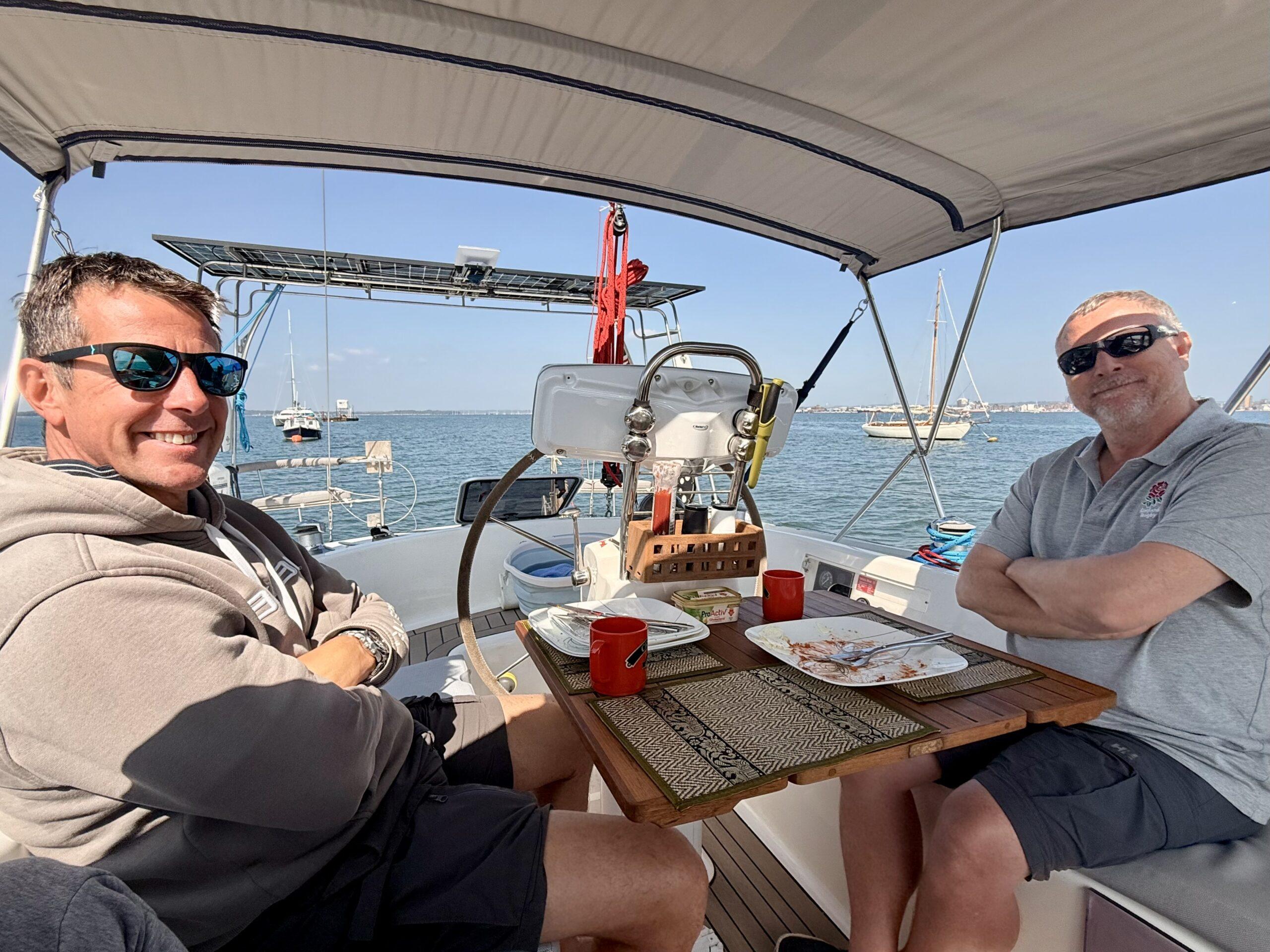
Time to take it to the next level
Having got to feel comfortable with Level 3 attachment – next it was onto Level 4!
We were still waiting for confirmation of Jenni’s medical appointment, so we decided to take the opportunity to head out of Poole and go try the new anchor. The weather was good and we decided to head around to Studland Bay and Chapman’s Pool for a few days.
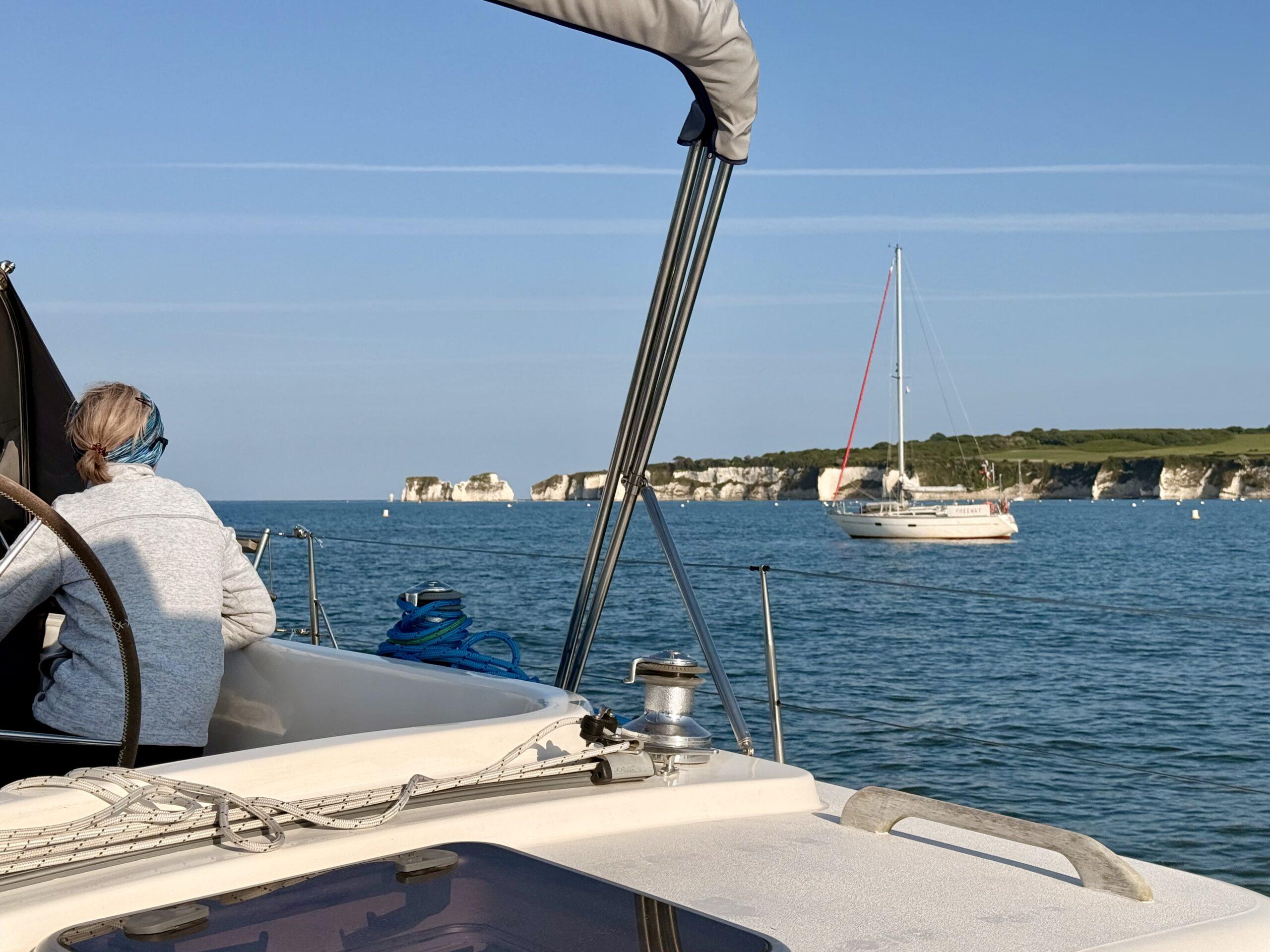
Anchoring is not something we’ve done a lot of, other than on Flotillas – and they always seemed to be beset by problems, with anchors getting caught in rocks, anchor chains crossing, and various things. With hindsight it may have been more situational in terms of lots of inexperienced sailors on flotilla holidays, therefore sailing boats that they didn’t own, or know – but it had made anchoring feel a little bit difficult.
Studland Bay
We set off for Studland Bay on Monday 19 May, and as we had been using the holding tank whilst in Poole Harbour, we also had to get far enough offshore to be able to empty it! Installing the holding tank had been a job we had done when refitting Yanula Blue as we like to preserve the environment as much as possible. Luckily we have 2 heads (toilets) onboard and so when living in a place like Poole Harbour we tend to turn one heads to the tank (for number 2’s), and the other to the sea (for number 1’s)!
There was no wind at all so we motored offshore to empty the tank, then motored back to Studland Bay. There were hardly any boats there so we easily found a spot outside the ‘no anchor’ zone (very controversial scheme, but designed to protect the seagrass and seahorses, and no hardship to us!) and put down the hook for the night.
The hook is a 25kg Rocna and is attached to one hundred metres of 10mm chain, so we have plenty of scope. In general, training manuals have you put out 4 times length of chain multiplied by the depth and depending upon the forecast weather, we might put more chain out if we think we might not hold.
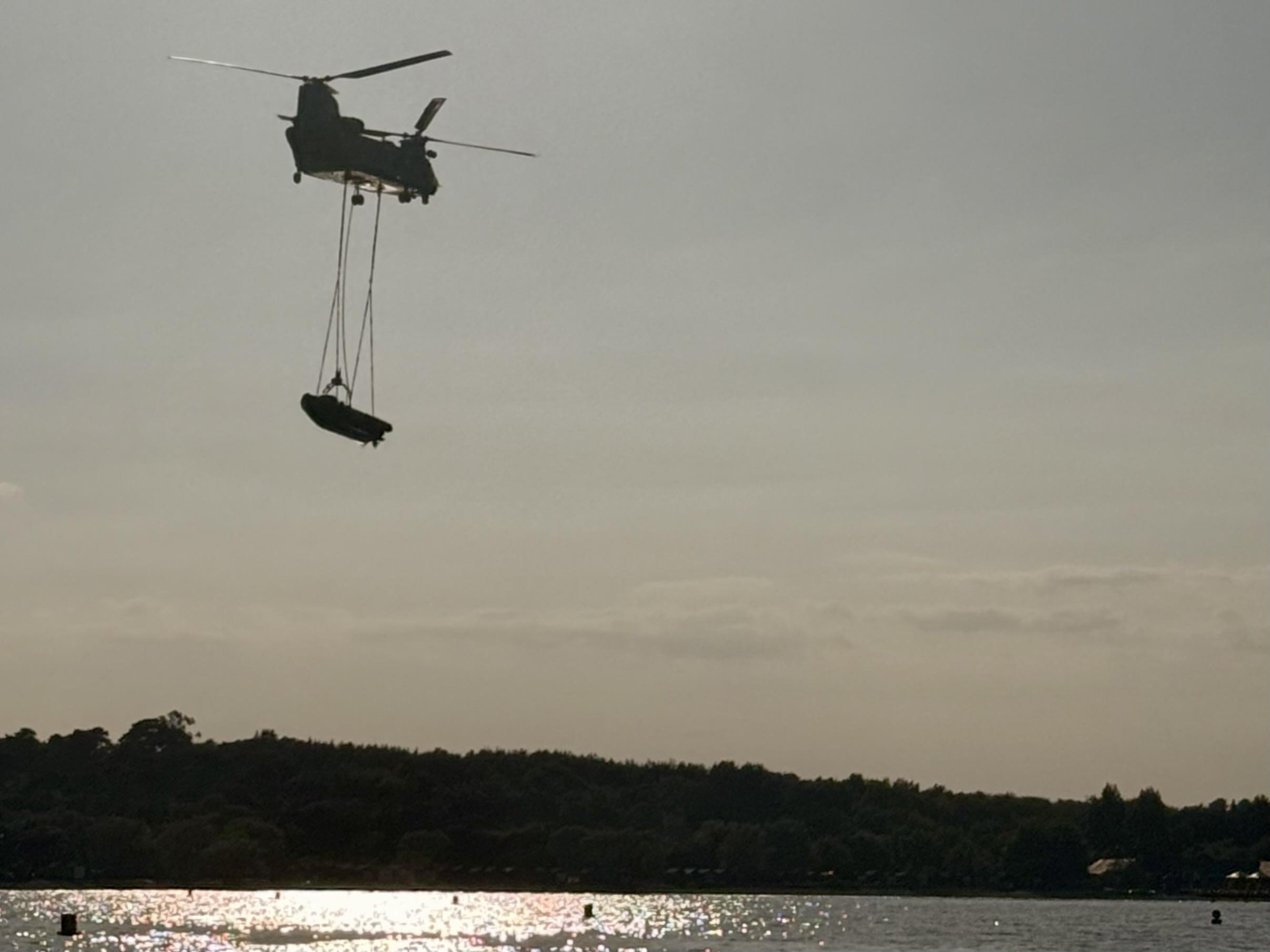
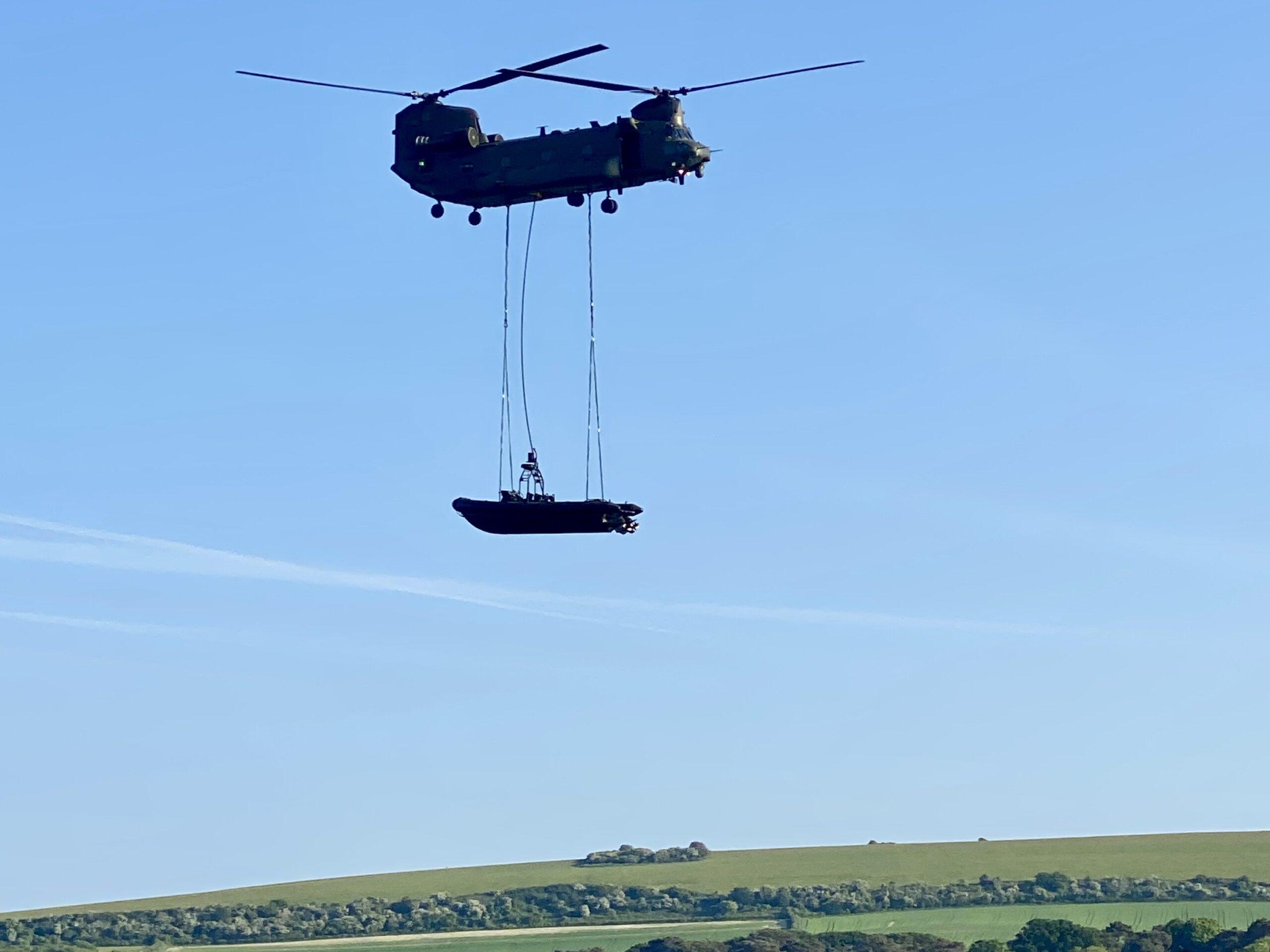
We expected to just have an early night, but instead were treated to a display by what we believe to be the SBS (Special Boat Service) with a helicopter picking up a rib and flying around with it! Wow!! There were 2 ribs who alternated the practice, and you could see the helicopter fly over the rib, attach some lines, the people would scale the lines into the helicopter, then fly off with it again! The practice went on late into the night and was amazing to watch.
Chapman’s Pool
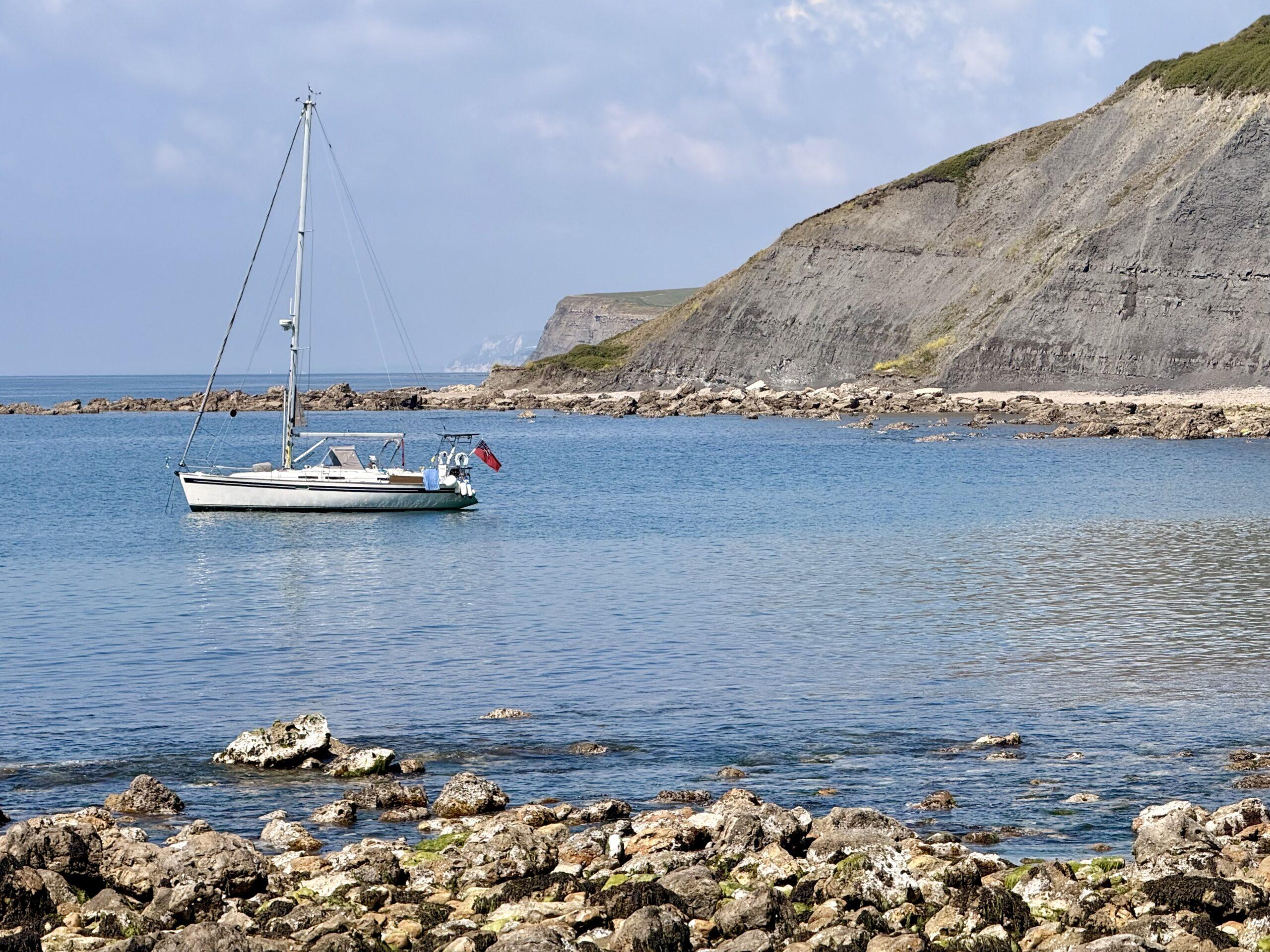
It was a rolly night as it often is at Studland Bay, so we set off early the next morning to Chapman’s Pool. This is on the outskirts of the Lulworth Firing Range, an area of the coast by Lulworth which is often used for firing practice and so access is restricted at certain times to walkers, and also sailors. Jenni thought there was no firing that week, but as we sailed past the National Coastwatch Institute (NCI) on St Albans Head we spotted a red flag flying and so, Chris asked the NCI via VHF radio if a red flag flying meant firing was happening – and at the same time he asked the radio crackled on calling Yanula Blue!
We quickly did a u-turn as didn’t really want to be in the literal firing line, and chatted to NCI on the radio. They advised there was firing, but we should speak to the range controller on Channel eight to see if we could proceed to Chapman’s Pool. We did and were told this was fine, so we did another u-turn and carried on our track.
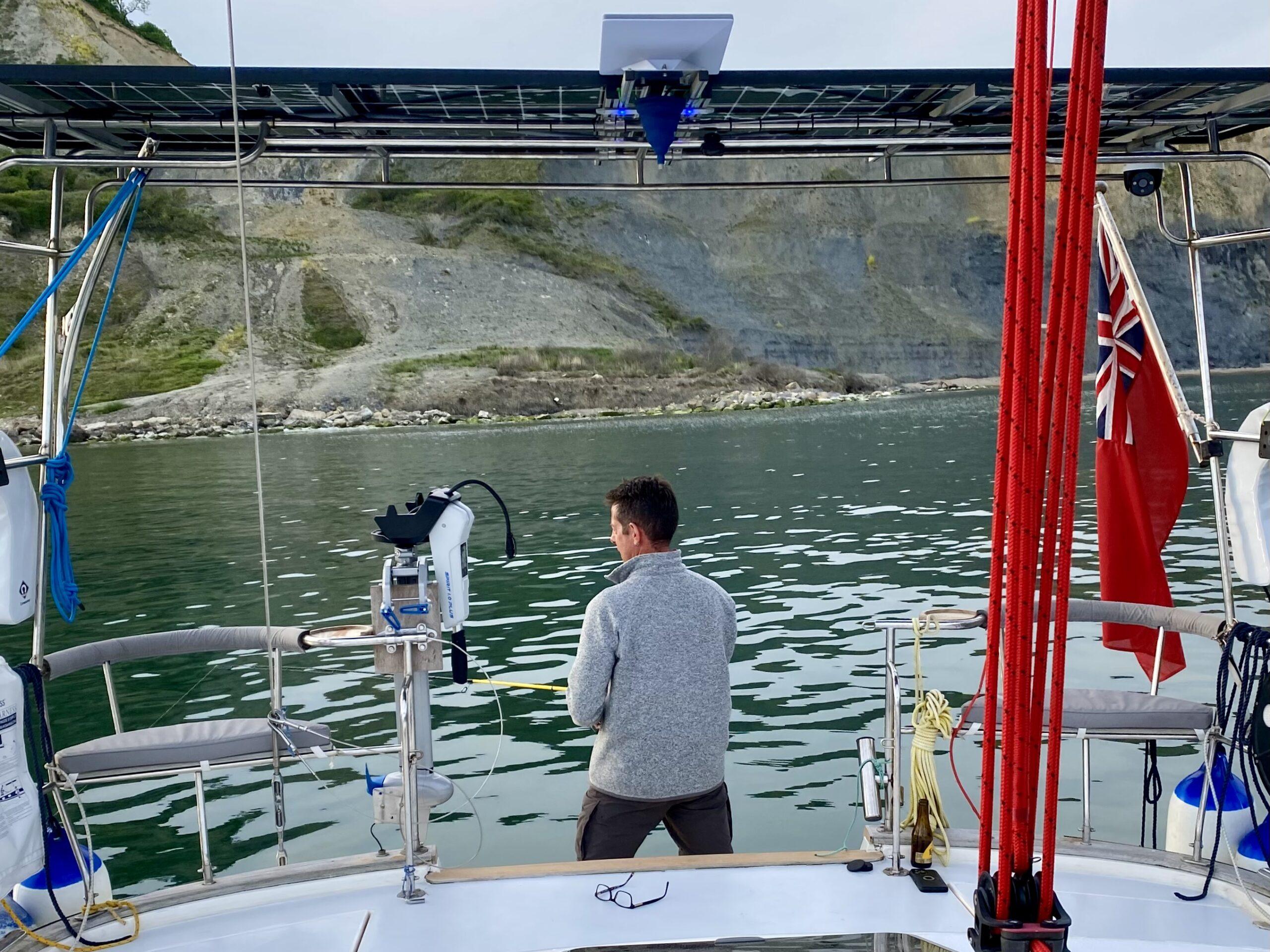
We weren’t the only boat in Chapman’s Pool, which is quite a small area, so we anchored next to them, but a little further toward the rocks than we would have liked. As the tide lowered we felt too close, so we moved again … but similarly weren’t happy, so we moved again, a bit further out of the bay. Ironically, after our third move the original boat (which was in the prime position) left the bay – but we decided 3 times was enough and settled for the night.
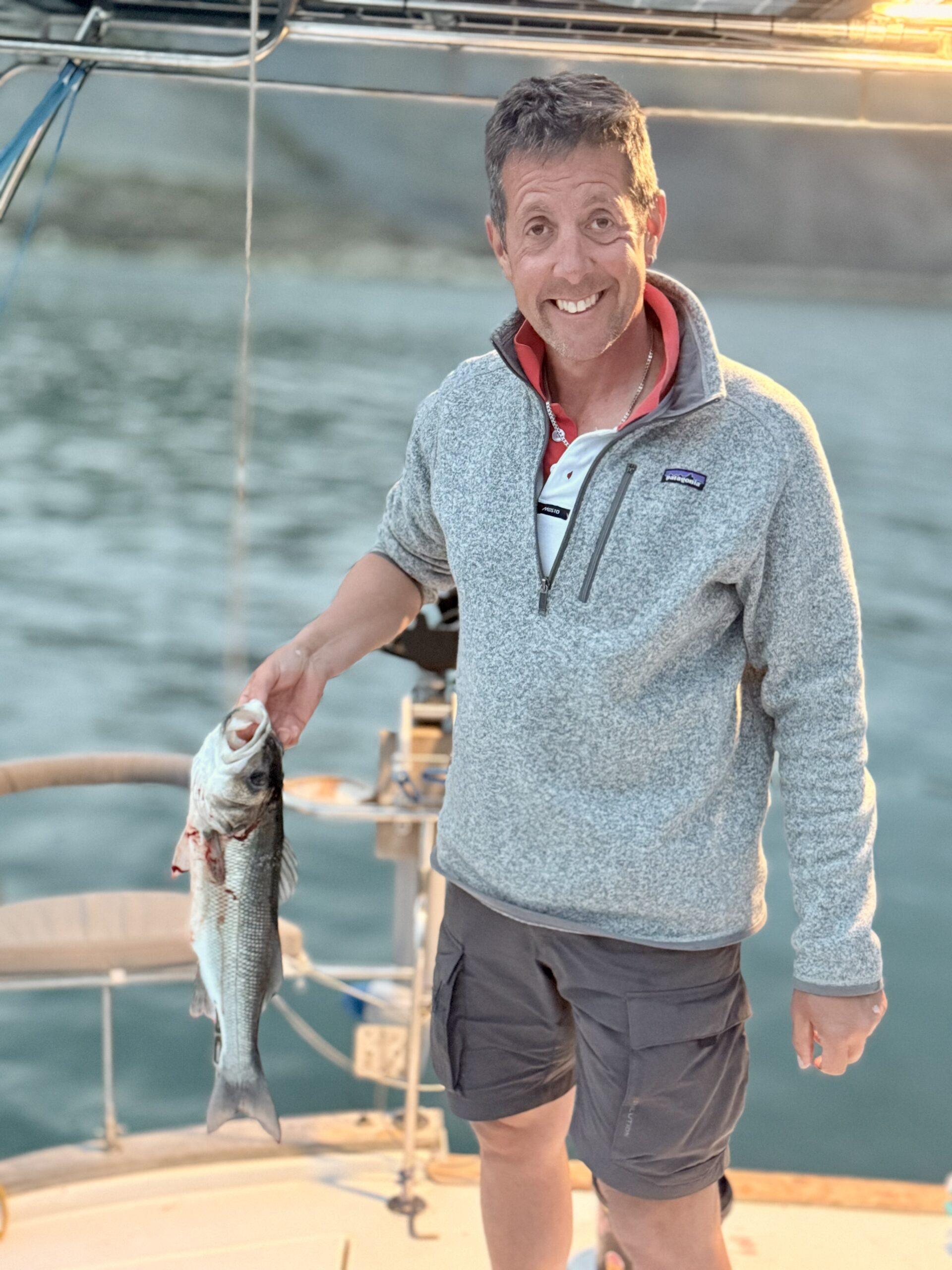
I’m going fishing pet!
Chris was testing his new fishing rod whilst at anchor and getting used to casting off the stern with the solar arch fouling proceedings. As the sun was setting we could hear and see the fish feeding toward the edges of the bay and as the boat yawed we we drifted closer to the activity. Chris could just about cast that far and soon was getting bites. Eventually, two lovely sea bass were pulled onboard and after a quick check on the internet, gutted and prepared for dinner in the coming days.
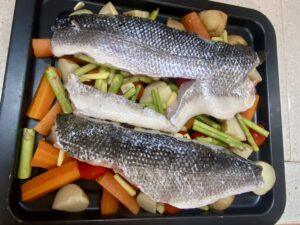
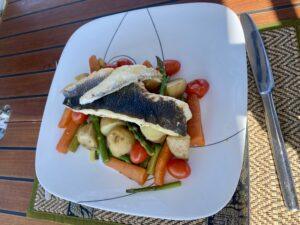
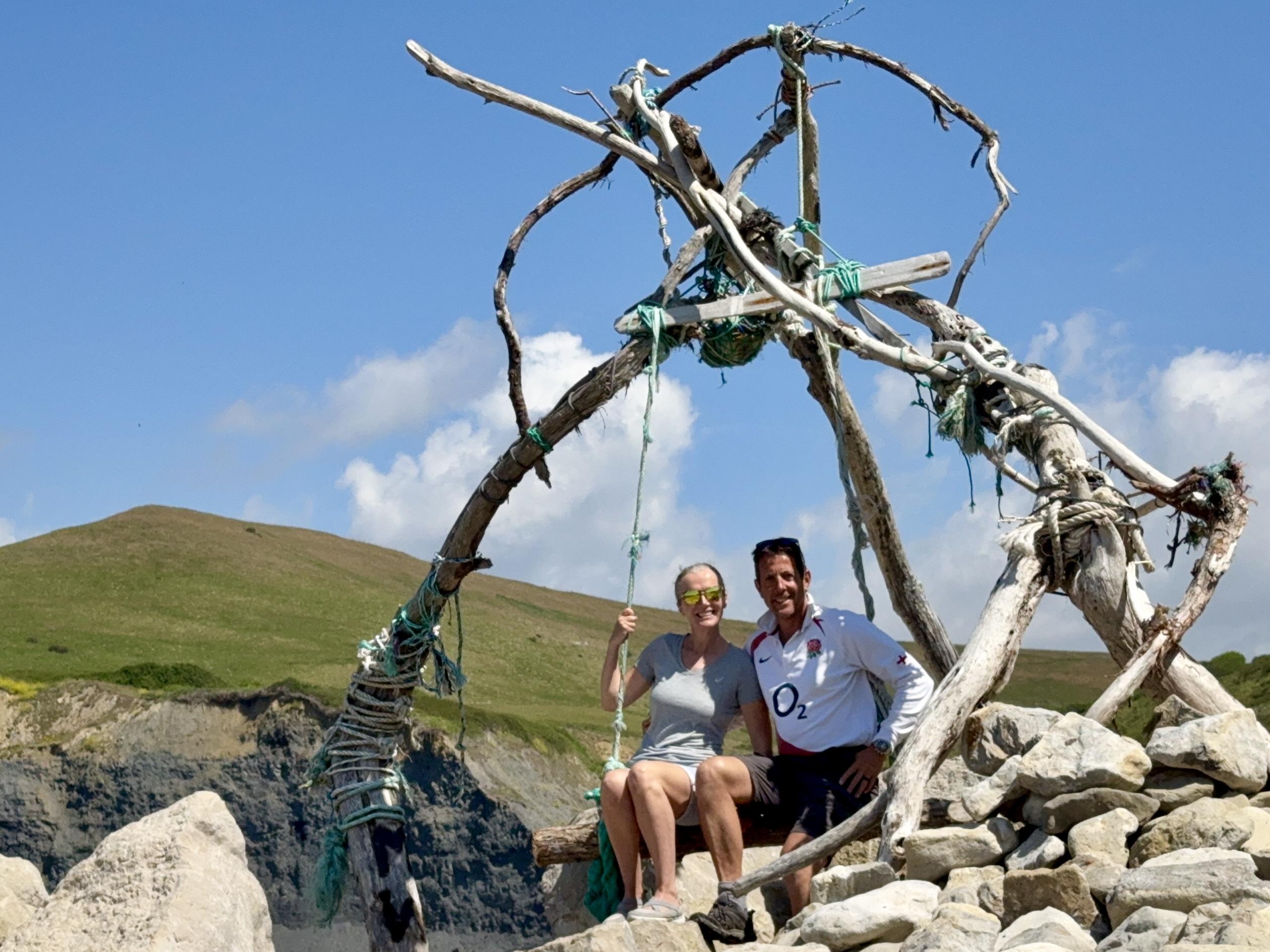
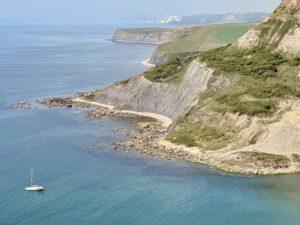
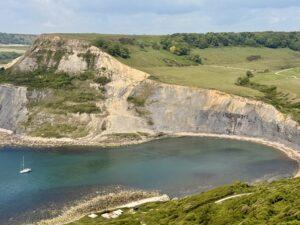
We ended up staying 2 nights till Thursday as it really was idyllic there, the sun was out, there was nobody else anchored on the first night, and we felt settled. We find the first night at anchor in a new location is a little disturbed, as you hope the anchor digs in and the boat doesn’t drag. We do use an anchor alarm to alert us if so, but we were safe that night. The next day we felt secure enough to get out the dinghy and go ashore to explore and have a hike – and of course take lots of photos of Yanula Blue in the bay.
Back to the Marina
Whilst at Studland Jenni had got the call for the medical appointment which was on Friday, so we had to return for that – plus there was a big wind forecast – so we decided to go back into the marina for this time, which was a good decision, as a period of bad weather really did come through!
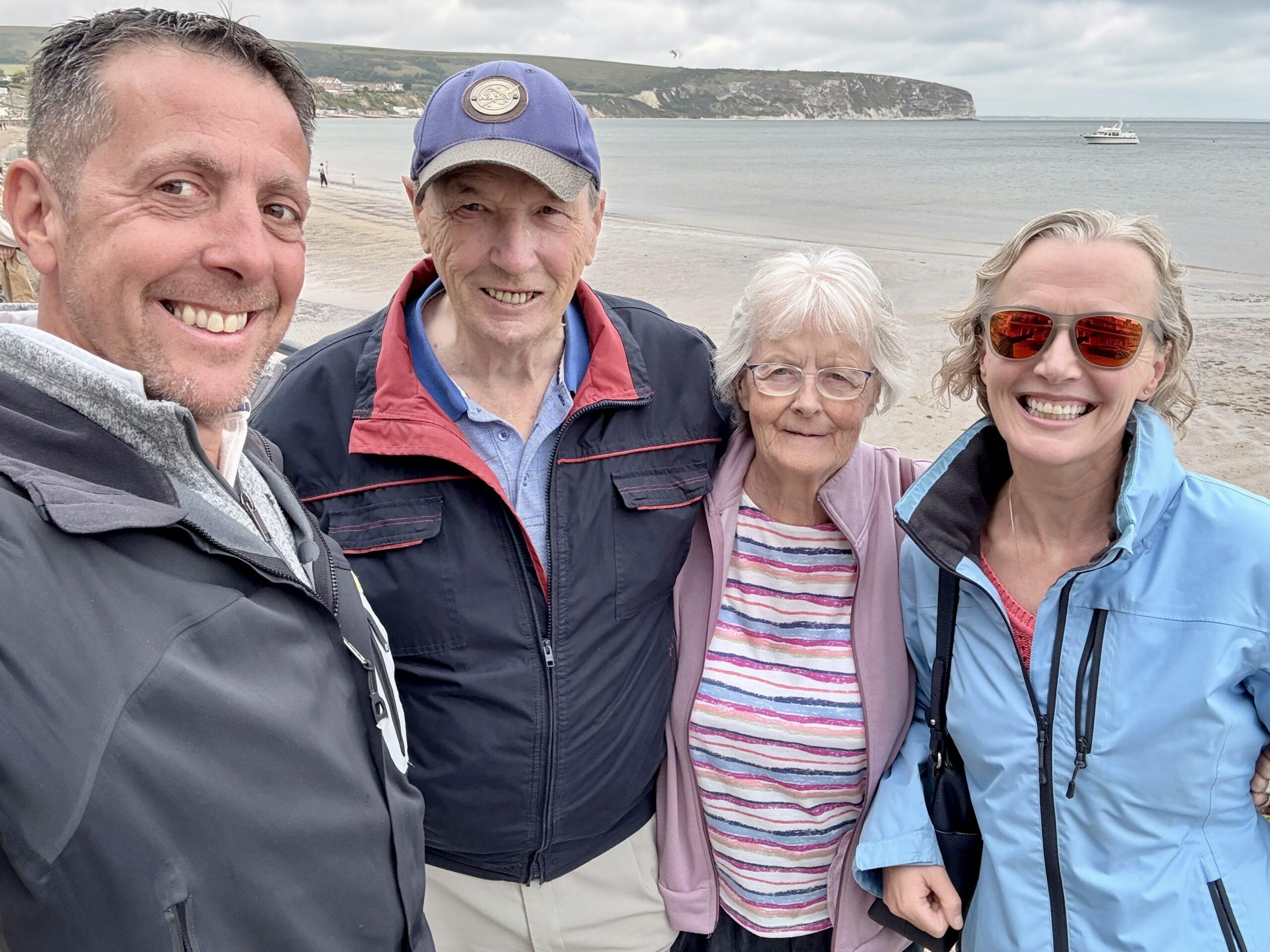
We also carried on catching up with friends, and Jenni’s parents also came down for a very last minute trip which was lovely and lots of fun. The medical appointment had also dealt with the concern quickly and hopefully for a long time now, so it was, all in all, a very good trip back to the UK.
We set off again (third channel crossing this year) back to Cherbourg, possibly leaving the UK by sail for the last time for a while on Friday 30 May!