Leaving Cape Verde
The morning we left Cape Verde for the Atlantic crossing felt slightly surreal. We were up early for showers,
final checks, and goodbyes before slipping the lines and heading out into the open ocean.
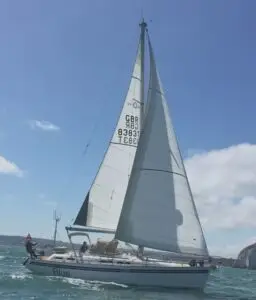
It didn’t take long before the conditions reminded us this was the Atlantic. The wind was already blowing hard and the sea was lively as we headed away from land. Just behind us was another rally boat, Relax, which was reassuring as the islands slowly disappeared behind us.
Very quickly we settled into the rhythm that would carry us across the ocean – a three-hour watch system, rotating through the day and night so someone was always on deck.
The first day was mostly about getting used to things again – the movement, the noise, and the realisation that this would now be home for the next couple of weeks. We had already done the leg from Gran Canaria to Cape Verde in 6 days, which was a great trial run!
The First Few Days
The first couple of nights were not particularly restful. None of us slept well at the beginning. The boat creaks and bangs in ways you don’t quite expect, and everything moves constantly. Add in big seas and gusts over 30 knots and it takes a little while for everyone to adjust.
By day three we were starting to settle into the crossing properly. Music was playing in the cockpit (Duran Duran made an appearance) and we chatted occasionally on the radio with other boats, including Joyce Ellen. Later that night we passed them quietly in the darkness.
There were a few small boat jobs early on as well. A soft shackle on the pole came loose while someone was making tea — fortunately it was still daylight — and later another shackle worked its way off the staysail.
Nothing major, just the usual reminders that the boat always needs attention.
Life On Board
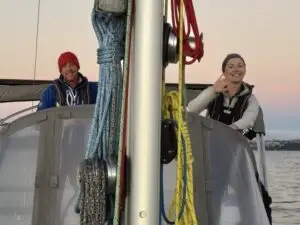
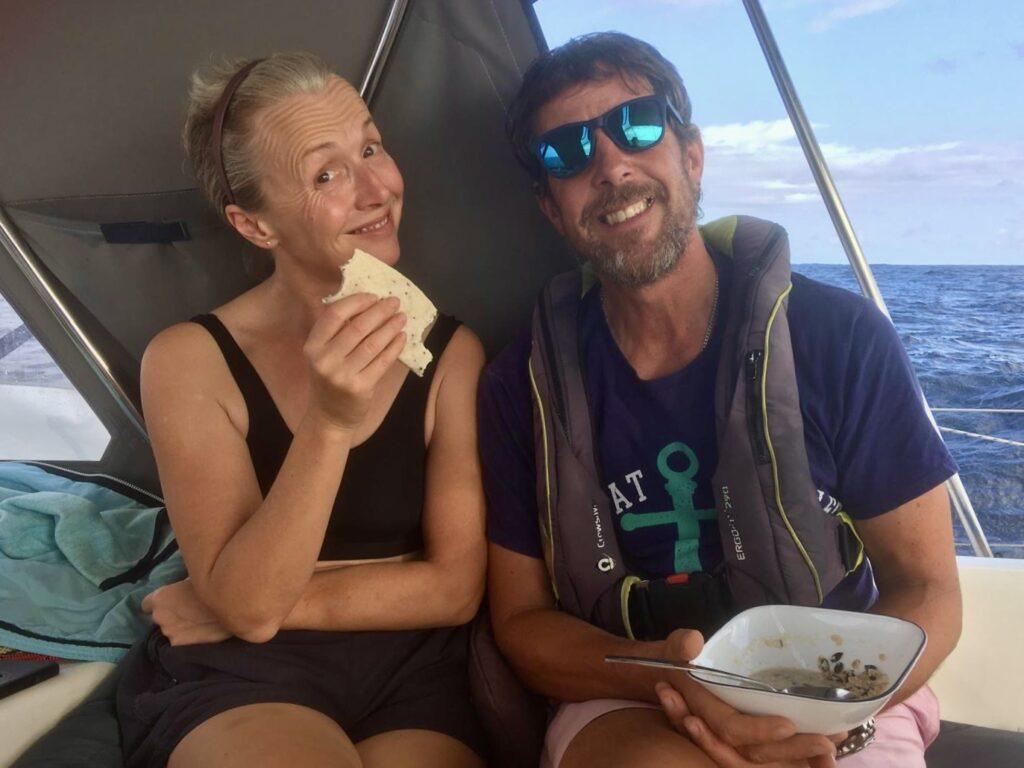
With three of us on board we rotated the role of “mummy”, which basically meant being in charge of cooking for the day and keeping things vaguely tidy.
Chris took the first turn, then Tina, and then it was Jenni’s turn.
Cooking at sea is always interesting. Jenni’s attempt at meatballs didn’t quite go to plan and eventually turned into something closer to a ragu, which Tina and Chris said was nice, but Jenni did was not particularly enthusiastic about!
By day five everyone was feeling a bit tired but we were starting to find our rhythm. Flying fish regularly launched themselves across the deck and one morning we found six scattered around the cockpit.
The days became quite peaceful in a way. Everyone had their roles and there were no major incidents, which is exactly what you hope for mid-ocean.
Halfway and a Bit Tired
Around the halfway point we realised that fatigue had quietly crept in.
At one stage Jenni managed to fall asleep on watch and Chris struggled to rouse her even starting to worry she had had a heart attack! Not ideal and it turned out she didn’t even feel tired which shows what true fatigue can do! Even Chris proved surprisingly difficult to wake up for one of his shifts as well! It turns out ocean crossings can wear everyone down a little.
There were quieter moments too. One afternoon Jenni played around with a bit of macramé in the cockpit while we drifted along under light winds.
We were also experimenting with different sail combinations depending on conditions — gennaker, staysail and genoa — trying to keep the boat moving as the wind faded.
A Few Eventful Nights
One night the autopilot stopped working, which immediately created a lot more activity on deck. We had to reef the twizzle sail and get everything stabilised while steering manually for a while.
Another night brought confused seas and strong gusts. The boat rolled wildly and felt like a bit of a bucking bronco for several hours.
Chris also had to go up the mast at one point to cut away a broken horn fitting, which is not exactly anyone’s favourite mid-Atlantic activity.
Despite all the warnings before we left, the squalls mostly avoided us – we only caught the tail end of one, during Jenni’s watch when she saw 32 knots of wind and gently asked Chris to come and help her out. We watched them appear on the radar several times but they slid past without directly hitting us.
The Middle of the Ocean
By now the crossing had developed its own routine.
We pumped the bilge regularly, cleared sargassum weed from the rudder, checked sails for chafe and rotated watches. Life became quite simple.
We also officially joined the Deep Blue Club somewhere out there in the Atlantic. Wink wink!
Chris also kept trying his luck with the fishing line and eventually succeeded, landing a Spanish tuna on the fourth attempt. That evening we shared fresh tuna with another boat in the rally fleet, Eskalope, which felt like a proper treat after days of passage food. This was also definitely a highlight as a boat full of self proclaimed Norwegian Vikings came along side, threw us a line, and then we threw it back with a bag of tuna attached! Such pressure on Chris to tie a knot quickly – which he did after the sixth attempt!
Wildlife continued to appear around us as well, including the strange floating jellyfish that drift across the Atlantic. (Later on we discovered it was a Portugese Man o’ War – very deadly with tentacles 50m long, so glad we were onboard whilst it passed!)
Land Getting Closer
As the days passed, we started to feel that land was getting closer. The wind softened slightly and the air felt warmer. More wildlife and birds appeared.
Chris spotted some chafe on the clew of the twizzle sail so we dropped it, moved the poles around and switched back to the genoa and gennaker combination.
Then suddenly we realised we were on our final full day at sea.
During the night another rally boat, Alora, passed nearby and called us on the radio for a chat. Not long after, a brown booby decided to land on the boat for a rest, leaving an impressive mess on the solar panels before flying off again.
That night was quite rolly under staysail, but we slowed slightly so that we could arrive in Grenada at first light.
Land Ho – Grenada
Early on the morning of 7 February, as the sun began to rise, the outline of Grenada appeared ahead of us.
After fifteen days at sea, land always looks a little unreal at first.
The mood on deck lifted immediately. Cameras appeared, coffee was poured, and we watched as the island slowly grew larger on the horizon.
We had done it.
Cape Verde to Grenada in 15 days and 2 hours.
And just like that, the Atlantic crossing was over…. And the onshore celebrations could begin!